- The NHL’s board of governors got its first salary cap estimate for 2028-29 this week, landing at $127.5 million
- That’s a $14 million jump in a single year, the biggest since the cap system started
- Read below for what it means for the record contracts signed this summer
The NHL just handed every front office a number that changes how they plan the next few years.
NHL’s board of governors got their first look at the 2028-29 salary cap this week, and it came in at $127.5 million. Sportsnet’s Elliotte Friedman reported the projection, citing multiple sources familiar with the meeting.
That’s a $14 million jump from the projected 2027-28 number. It would be the largest single-season increase since the salary cap system went into place.
Here’s our breakdown of the numbers:
This season’s cap sits at $104 million and is already scheduled to climb to $113.5 million next year. Add in this new projection, and the league goes from $104 million to $127.5 million in just two offseasons, a 22.6% jump.
Compare that to where the league sat not long ago. The cap stayed frozen at $81.5 million from 2019 through 2022. Going from stagnant to a $46 million ceiling in under a decade is a different financial world for GMs to work in.
Teams locking up their stars this summer bet the cap room would be there to make the money work, and that flat stretch is exactly why this offseason’s contracts landed the way they did.

Minnesota’s Kirill Kaprizov set the market at $17 million a year to stay with the Wild. Anaheim’s Leo Carlsson topped it with an $18 million offer sheet the Ducks matched. San Jose’s Macklin Celebrini pushed it to $18.8 million with the Sharks.
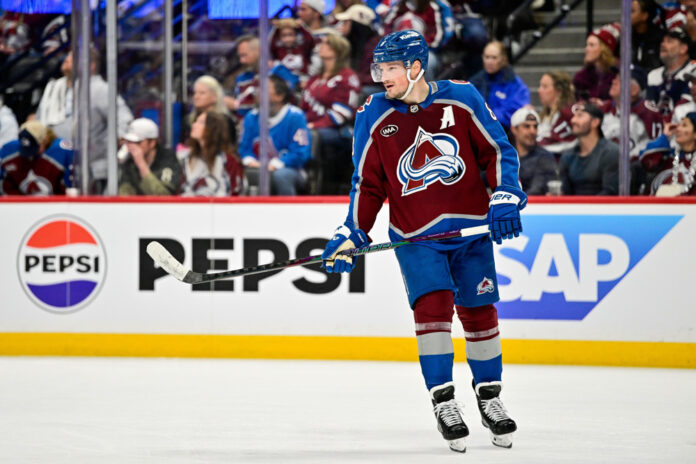
Colorado’s Cale Makar blew past all of them, signing an extension that pays him north of $20 million a season once it kicks in for 2027-28. His $20.4 million cap hit works out to about 16% of a $127.5 million ceiling, roughly the equivalent of a $16.64 million contract against this year’s $104 million cap.
Nothing here is finalized. Board of governors estimates are projections, not a locked number, and it could still move before the NHL and NHLPA settle on the real figure. If it holds anywhere close to $127.5 million, teams are staring down a stretch where the gap between this year’s cap and next gets harder to plan around every summer.